 By
By 
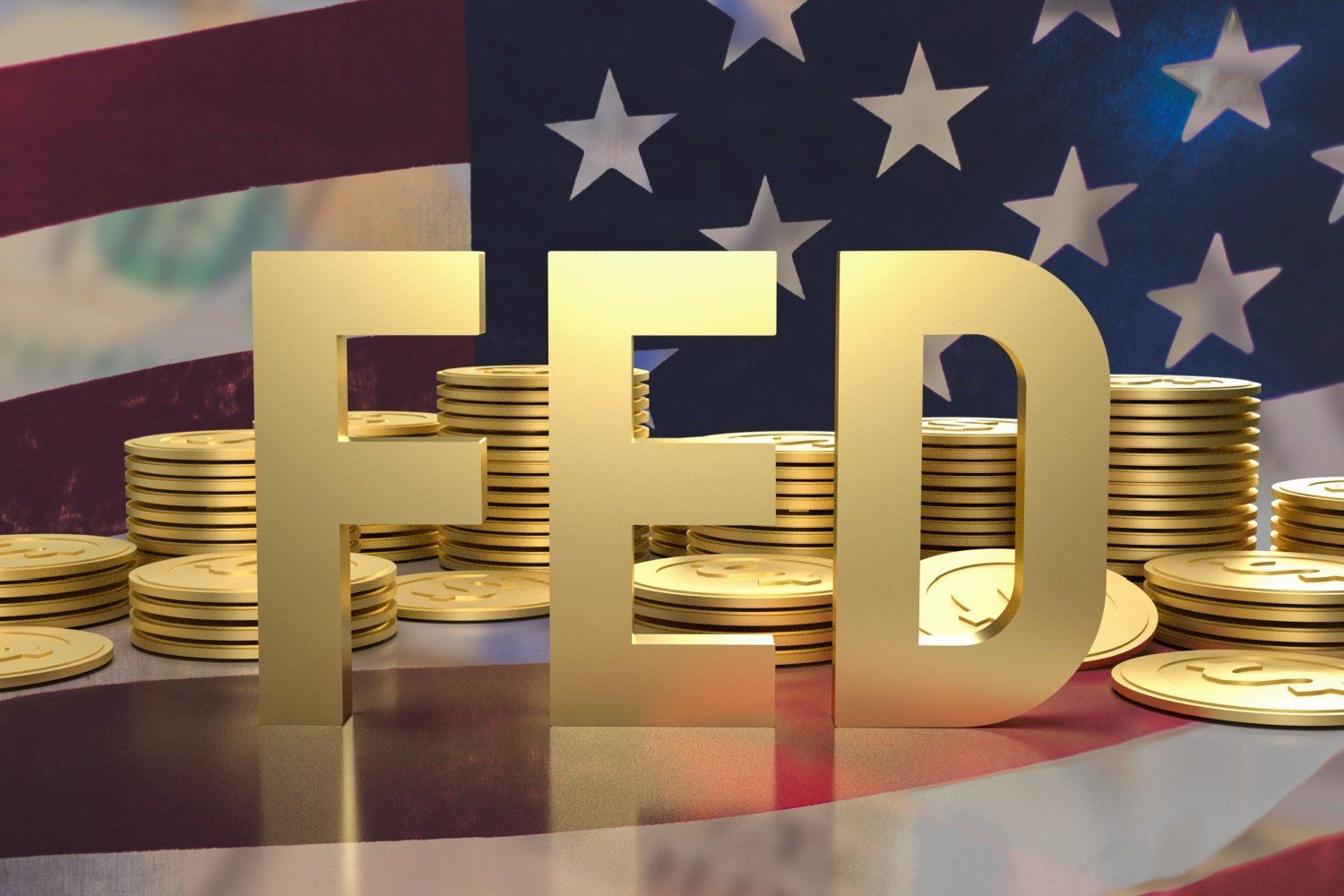
The US Federal Reserve held its last meeting of 2025 from Tuesday (December 9) to Wednesday (December 10) amid growing division between doves and hawks as labor market and inflation concerns rise.
The central bank met analysts’ expectations by lowering the federal funds rate by 25 basis points to the 3.5 to 3.75 percent range. It marks the third time this year that the Fed has cut interest rates.
Interest rates haven’t been at this level since mid-2022.
Preceding the October rate decision, the Fed Board of Governors was reportedly split between those concerned with preventing a further slowdown in the US labor market and those fearing the fight against inflation is far from over.
Lowering rates in turn lowers the cost of borrowing, which can provide businesses with more runway to grow their workforce. However, increasing available money supply by easing access to borrowing can also increase inflation.
The split between doves and hawks is still plaguing the Fed heading into the new year, which promises to see current Fed Chair Jerome Powell replaced with someone more likely to be on board with the much lower rate environment favored by the Trump administration. Two Fed board members cast dissenting votes against cutting rates this time around, while Trump loyalist Governor Stephen Miran favored a 0.5 percent cut.
By the end of the year, US President Donald Trump intends to announce a replacement for Powell, whose term expires in May 2026. Trump has criticized the Fed and Powell in particular, saying they haven’t lowered rates quickly enough.
On October 27, US Secretary of the Treasury Scott Bessent announced a shortlist of candidates to replace Powell, including Fed Governors Christopher Waller and Michelle Bowman, National Economic Council Director Kevin Hassett, former Fed Governor Kevin Warsh and BlackRock (NYSE:BLK) executive Rick Rieder.
The US government shutdown delayed the study and release of key economic data, which has left the Fed flying blind when it comes to planning the best course of action for the country’s economy. Even though the shutdown ended on November 12, Reuters states that there is still a bottleneck in economic reports and the Fed board will not receive a large tranche of data from statistical agencies, ‘including job and inflation reports for November that could help resolve the core debate among central bankers,’ until days after Wednesday rate announcement.
Looking at what data is available, the September unemployment rate ticked up to 4.4 percent, while the core inflation rate was 2.8 percent, still above the Fed’s 2 percent target. Despite this higher inflationary environment, a weakening labor market has become the focus of the Fed’s dual mandate of stable prices and maximum employment.
In his speech to reporters, Powell blamed sticky inflation on Trump’s tariffs. “These readings are higher than earlier in the year, as inflation for goods has picked up, reflecting the effects of tariffs,” he said.
Powell is taking the view that this effect may be short lived if the Fed can mitigate the risk of a more entrenched inflationary environment: “Our obligation is to make sure that a one-time increase in the price level does not become an ongoing inflation problem, but with downside risks to employment having risen in recent months, the balance of risks has shifted. Our framework calls for us to take a balanced approach in promoting both sides of our dual mandate.’
At its October meeting, the Fed said it would put a stop to its quantitative tightening activities as of December 1.
For the past three years, the independent government agency has been working to reduce its balance sheet from US$9 trillion in 2022 to US$6.6 trillion today. On Wednesday, the Fed signaled it will once again be buying US Treasuries, to the tune of US$40 billion starting on Friday (December 12).
“The Committee judges that reserve balances have declined to ample levels and will initiate purchases of shorter-term Treasury securities as needed to maintain an ample supply of reserves on an ongoing basis,” said the Fed.
The gold price traded in a right range around the US$4,200 per ounce level in the lead up to the Fed’s decision, spiking as high as US$4,230 following Powell’s speech. Lower interest rate environments lead to lower returns on fixed-income investments like bonds, which makes gold a more attractive investment. Silver spiked to a new all-time high above US$61 per ounce on Wednesday morning and managed to stay above US$61 following Powell’s statement.
Julia Khandoshko, CEO at the broker Mind Money, advised investors that US trade policy may matter more for gold in the coming year than the Fed’s monetary policies.
‘This is a thing that can change the rules of the game much more than a single meeting of the regulator. It is also unpredictable, unlike the other political or economic events. Therefore, it is important to monitor the Fed, but building a strategy solely around its decisions is no longer always justified,’ added Khandoshko
Equities reactions were fairly mixed following Powell’s statement on Wednesday, with the S&P 500 (INDEXSP:INX) up 0.47 percent to reach 6,872.35. Meanwhile, the Nasdaq-100 (INDEXNASDAQ:NDX) gained 0.08 percent to come in at 23,594.07, and the Dow Jones Industrial Average (INDEXDJX:DJI) was down 0.89 percent, coming to 47,982.86.
The next Fed interest rate decision will come on January 28, the first Fed meeting for 2026.
Securities Disclosure: I, Melissa Pistilli, hold no direct investment interest in any company mentioned in this article.